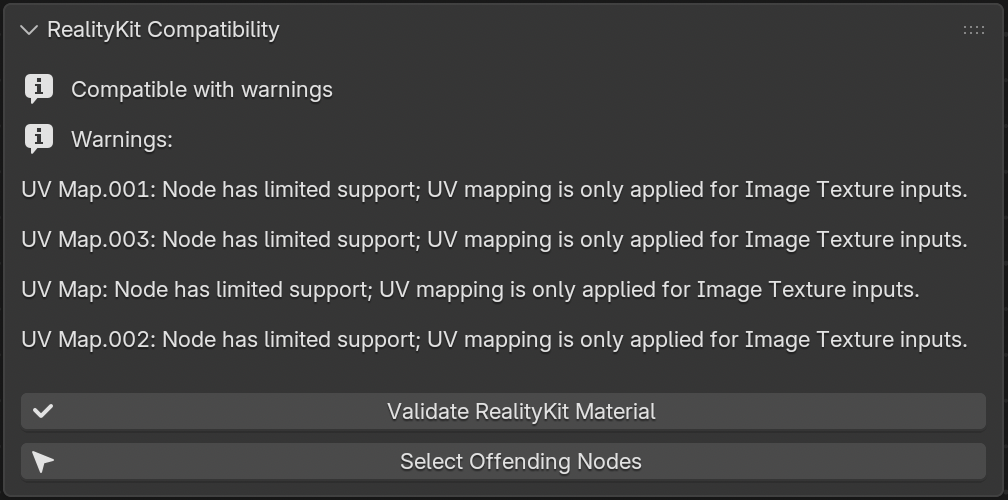
Validate
Flag unsupported materials early.
Material graphs are validated up front. Unsupported setups get flagged in Blender before they silently break downstream.

Export Blender scenes to RealityKit without guesswork, with stricter validation, MaterialX rewriting, and USD output that Reality Composer Pro actually understands.
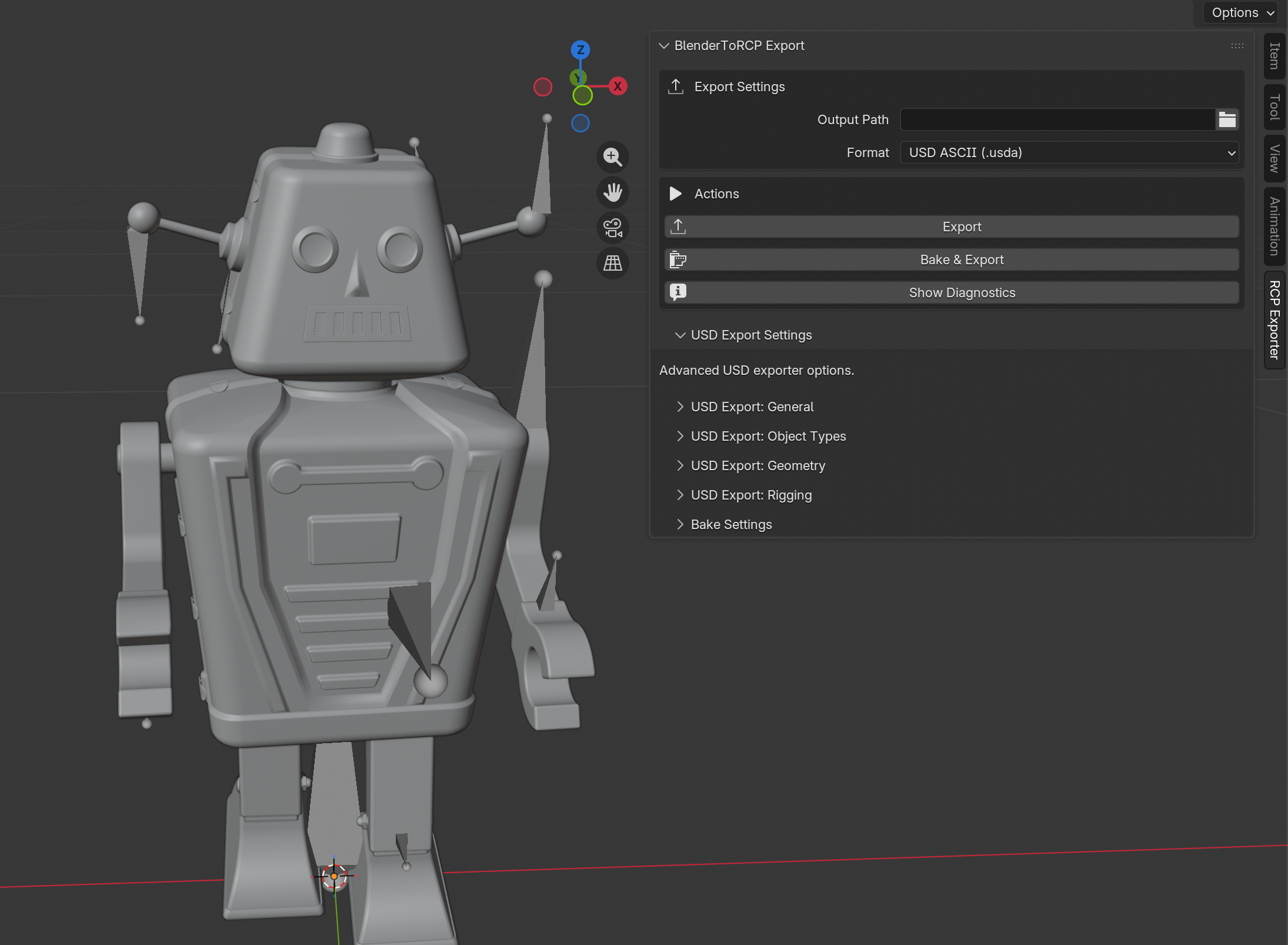
Each stage of the pipeline is handled separately, from validation and material rewriting to export and packaging, so problems surface early and fixes stay local.
Validate
Material graphs are validated up front. Unsupported setups get flagged in Blender before they silently break downstream.
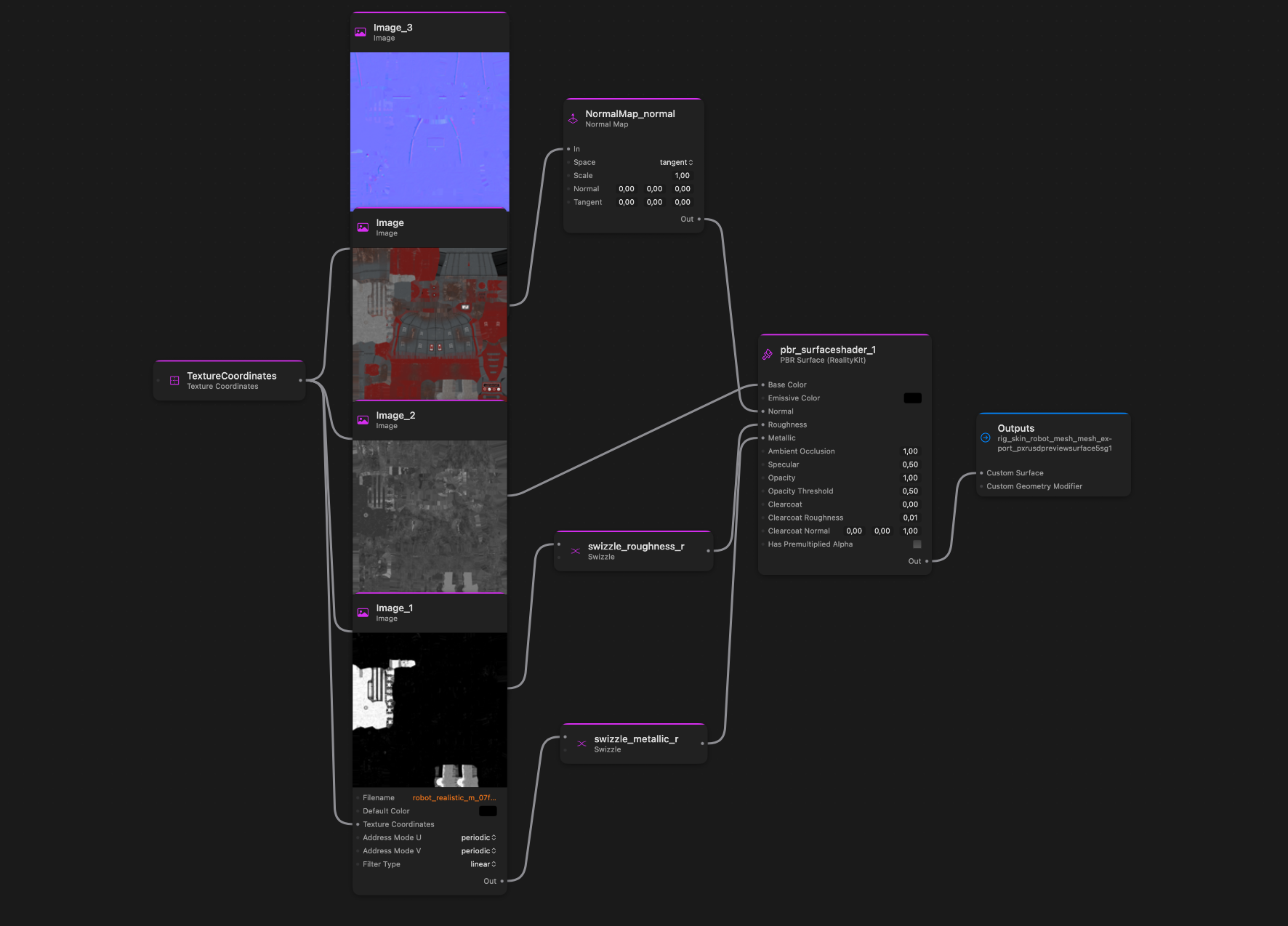
Export
Export .usda, .usdc, or .usdz, with supported Blender shaders rewritten into RealityKit-compatible Shadergraph output.
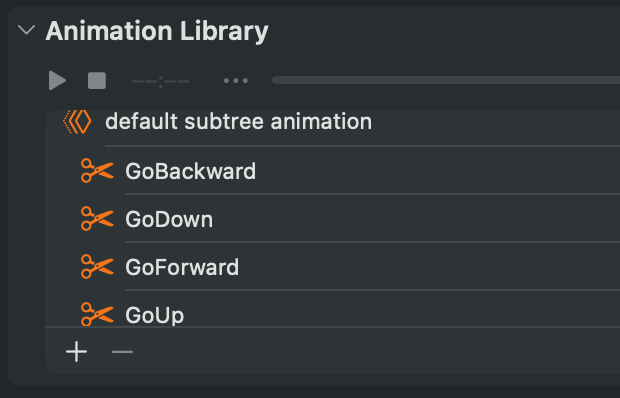
Package
Blender actions are baked into an Animation Library layout that Reality Composer Pro can consume directly, while textures and sidecar assets travel with the scene.
BlenderToRCP isn't just a UI add-on. Agents can inspect scenes, trigger exports, and patch USD as part of a larger content pipeline.
CLI + Skills
Use the CLI for validation and export flows, with two dedicated skills to help agents inspect scenes and run the right commands.
LLM ready
.usda works well with agents.Because .usda is plain ASCII USD, agents can read the scene, reason about it, and patch details such as shaders directly.
We use BlenderToRCP to deliver spatial work for our clients.